
2026-09-04 · Evan Voss
How to Check for Water Damage in Attics Following Roof Leaks
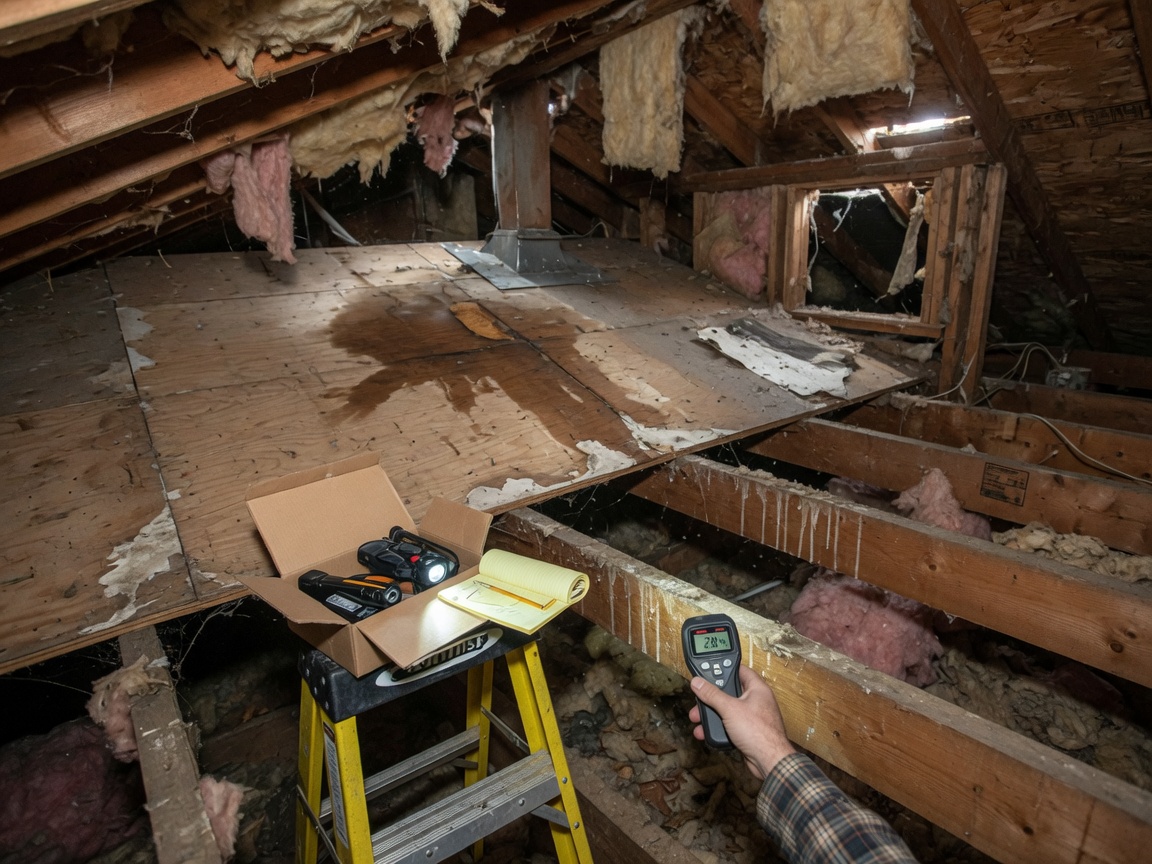
Start by entering the attic during daylight and scanning for discoloration on rafters or insulation, as roof leaks in Lexington commonly appear first as dark streaks along seams or around vents. In Fayette County homes built before 1980, which dominate areas like Downtown and Hamburg, these signs show up within weeks due to the humid subtropical climate that speeds moisture absorption. Check near the roof deck for sagging drywall or wet cellulose insulation that feels spongy to the touch. Use a bright flashlight to inspect every corner, paying attention to areas above bathrooms and kitchens where plumbing stacks meet the roof.
Preparing for a Safe Attic Inspection
Gather a sturdy ladder, headlamp, moisture meter, and camera before climbing into the attic space. Lexington's older housing stock in Chevy Chase and Beaumont often features low-clearance attics with limited walkways, so move slowly to avoid disturbing insulation or stepping through ceilings. Wear long sleeves and a respirator because the humid summers here promote rapid mold growth once leaks introduce moisture. Test the meter on known dry wood first, then probe rafters and sheathing every few feet along the roof slope. Document any readings above 15% moisture content with photos for reference when contacting professionals.
Focus initial checks on common leak entry points such as flashing around chimneys, skylights, and valleys. In neighborhoods near Keeneland or the Kentucky Horse Park, tree cover can hide roof damage until water reaches the attic, making systematic inspection essential. Run the moisture meter along collar ties and ridge boards where condensation from mild winters can compound roof leak issues. If insulation feels damp or smells musty, note the location precisely rather than disturbing it, since moving wet material spreads spores in Fayette County's climate.
Identifying Specific Signs of Water Damage
Look for water stains on wood that appear as brownish rings or streaks, a frequent issue in Southland homes with aging asphalt shingles. Blistered paint on the underside of the roof deck signals ongoing moisture, especially after heavy summer storms common to the region. Warped or discolored insulation batts indicate leaks that have wicked along the slope, a pattern seen in older Lexington properties near Rupp Arena. Check for rust on metal fasteners or HVAC ducts, which can form within months in the area's humidity. These visible cues often precede larger structural concerns if left unaddressed.
Compare findings against typical Lexington roof lifespans of 15–25 years for asphalt shingles. Homes near Ashland Estate or Lexington Cemetery frequently show attic damage from wind-driven rain entering aged flashing. Note any daylight visible through the roof deck during daytime checks, as this points to gaps allowing water intrusion. In Frankfort-adjacent areas with similar terrain, soil movement can shift foundations slightly and stress roof lines, creating new leak paths over time.
When Professional Help Becomes Necessary
If moisture readings exceed 20% or mold is visible on more than a few square feet, stop inspection and arrange for structural drying services to prevent further spread. Lexington's hot summers accelerate mold development in attics, turning small roof leaks into larger remediation projects within days. Contact specialists for ceiling water damage repair when water has reached drywall below, as DIY removal risks structural weakening. For homes in Hamburg or Beaumont showing repeated issues, a full assessment often reveals hidden damage along multiple rafters.
Review related patterns in older properties by reading signs of hidden water damage in older Lexington homes before scheduling work. Prompt attention limits secondary issues like insulation replacement or electrical hazards in Fayette County attics. Evo Restoration LLC operates from 3845 Trout Ct, Lexington, KY 40517 with hours Monday through Friday 8am–6pm and Saturday 9am–2pm to handle these inspections.