
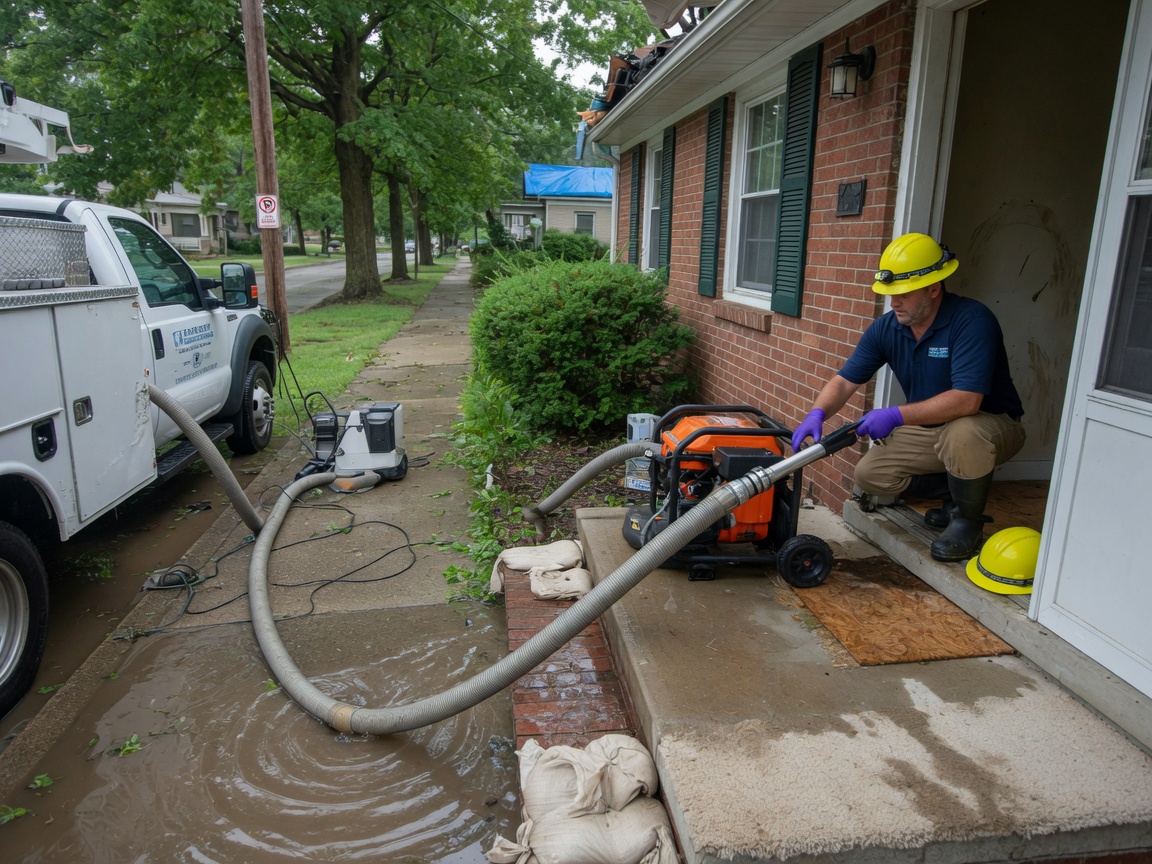
Lexington homes built before 1970 in neighborhoods like Southland and Chevy Chase often sit on clay-heavy Fayette County soil that holds moisture after heavy rains. Water extraction here requires pumps rated for silt-laden water and immediate removal to prevent wicking into brick foundations common on these older blocks. Crews stage equipment through side yards to avoid damaging the narrow driveways typical in these areas.
The region's humid subtropical summers accelerate mold growth once water sits longer than 24 hours, especially in crawl spaces under Hamburg and Beaumont ranches. Extraction teams use moisture meters on joists and subfloors before pulling water, then document readings for insurance adjusters who frequently cover claims from Rupp Arena event parking lot runoff or Keeneland-area drainage issues.
Water Extraction Services Near You — Choose Your City
Every city below has its own local Water Extraction Services page with coverage details.
Frankfort Road corridors and Downtown basements face occasional sewer backup during intense summer storms. Technicians isolate affected zones with containment barriers and extract standing water before it reaches electrical panels or HVAC returns, a step that protects the dense historic stock around Ashland Estate and Lexington Cemetery.
Portable extractors with 200 CFM ratings handle most residential jobs while larger truck-mounted units serve commercial spaces near the Kentucky Horse Park. Every extraction ends with a final moisture audit to confirm readings below 15 percent before equipment leaves the site.
Technician insight
In Lexington the thing that catches most people out with water extraction is how quickly clay soil in Southland and Chevy Chase keeps feeding moisture back into crawl spaces after the pumps stop; if you do not pull the water and run dehumidifiers the same day, the humidity from our summers restarts the cycle before the next crew arrives.
Southland Basement After Summer Storm
A 1960s brick home in Southland took six inches of water through a clogged downspout during a July thunderstorm. Extraction crews found water had wicked into the oak subfloor and reached the HVAC closet. They pumped the basement, extracted carpet pads, and verified joist moisture below 12 percent before leaving the site dry enough for the homeowner's restoration contractor.
Water Extraction Services Services We Offer
✓Basement Water Extraction
Removes standing water from Lexington basements using submersible pumps suited to clay soil runoff common in Southland and Chevy Chase.
✓Crawl Space Extraction
Extracts trapped water from under older Fayette County homes where humidity traps moisture against joists after summer storms.
✓Carpet and Pad Extraction
Pulls water from wall-to-wall carpet and padding before it reaches hardwood in Hamburg and Beaumont properties.
✓Hardwood Floor Extraction
Dries and extracts water from tongue-and-groove floors in pre-1960 homes near Downtown and Ashland Estate without cupping the boards.
✓Commercial Water Extraction
Handles larger volumes in retail and office spaces around Rupp Arena and Keeneland using high-capacity truck units.
Water Extraction Services Cost in Kentucky
| Service | Typical Range | What Affects It |
|---|---|---|
| Residential Carpet Extraction | $250–$650 | Depends on square footage and water depth in older Southland homes |
| Crawl Space Extraction | $400–$900 | Higher when silt from Fayette clay soil is present |
| Basement Pump-Out | $300–$750 | Varies with sewer backup versus clean water in Chevy Chase |
| Hardwood Floor Extraction | $350–$800 | Requires extra care on pre-1970 tongue-and-groove in Downtown |
Ranges are typical for Kentucky and confirmed with an exact written quote before any work starts.
How it works
- 1
On-Site Assessment
Technicians measure water depth, test for contaminants, and map affected zones in the specific Lexington neighborhood.
- 2
Equipment Staging
Pumps, extractors, and containment barriers are positioned through side access to protect narrow driveways and landscaping.
- 3
Water Removal
Standing water is extracted in stages, starting with the deepest areas and moving to hidden pockets in crawl spaces or under cabinets.
- 4
Moisture Verification
Final meter readings confirm dryness levels before equipment is removed and the site is released for restoration.
Pricing
Upfront quotes based on volume, access, and whether carpet or hardwood is involved; typical residential jobs fall in the mid-hundreds to low thousands.