
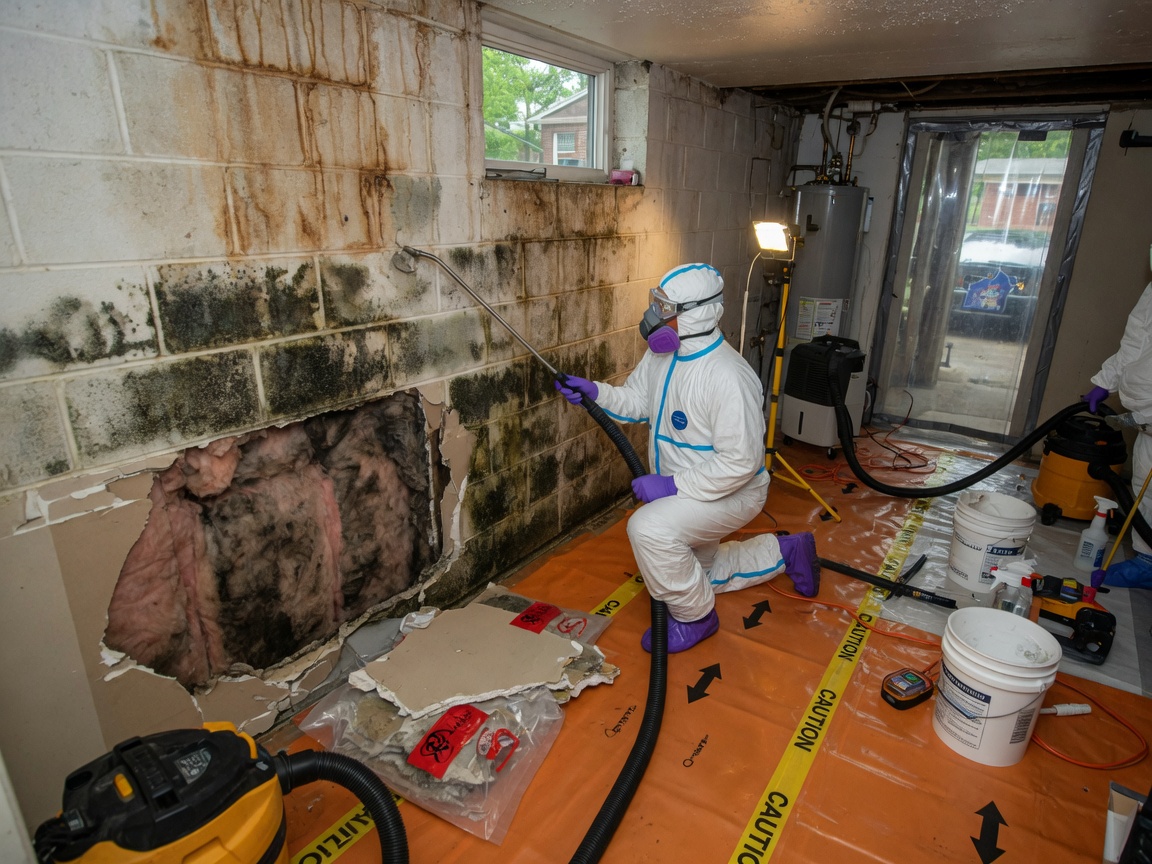
Lexington's humid subtropical climate brings hot summers that drive moisture into crawlspaces and basements of pre-1970 brick homes common in Chevy Chase and Southland. When water from roof leaks or poor grading enters these spaces, mold colonies establish quickly on joists and insulation. Remediation requires negative-air containment and HEPA filtration to prevent spores from migrating into living areas, especially in compact layouts typical of Beaumont and Hamburg subdivisions.
Fayette County soil holds moisture longer than the drier terrain near Frankfort, so slab-on-grade homes in newer sections of Hamburg often see hidden growth behind baseboards after minor flooding. Technicians must remove affected drywall up to 18 inches past visible staining and treat subfloors with antimicrobial solutions rated for porous materials. Failure to address HVAC ducts in these homes allows spores to recirculate, turning a localized issue into whole-house contamination.
Mold Remediation Near You — Choose Your City
Every city below has its own local Mold Remediation page with coverage details.
Older two-story homes near Rupp Arena and Ashland Estate frequently have balloon framing that channels water from upper levels straight to first-floor walls. Remediation crews cut inspection openings at multiple heights and use moisture meters calibrated for Kentucky hardwoods to map saturation. This step prevents callbacks that occur when hidden pockets behind plaster are missed during rushed jobs.
Mild winters in the region keep soil temperatures above freezing, allowing year-round microbial activity in Lexington Cemetery-adjacent neighborhoods where mature trees shade yards and reduce evaporation. Post-remediation verification includes air sampling at multiple elevations and a 48-hour drying window before encapsulation to meet local building expectations for re-occupancy.
Technician insight
In Lexington the thing that catches most people out with Mold Remediation is how our hot humid summers keep crawlspaces under Southland and Chevy Chase homes above 60 percent RH year-round, so even minor grading issues around the foundation let mold return inside six months if the vapor barrier is skipped.
Hidden Growth After Sump Failure in Hamburg
A homeowner in Hamburg noticed musty odor two weeks after a sump pump quit during heavy rain. Inspection found black mold on subfloor joists and insulation extending into two first-floor walls. Crews contained the space, removed 120 square feet of materials, treated framing, and installed a sealed vapor barrier. Air tests cleared the home for occupancy after four days of drying.
Mold Remediation Services We Offer
✓Black Mold Removal
Full containment and removal of Stachybotrys in water-damaged basements common to Southland and Chevy Chase homes.
✓Attic Mold Remediation
Ventilation assessment and insulation replacement for mold caused by roof leaks in older Lexington two-stories.
✓Crawlspace Mold Treatment
Vapor barrier installation and joist cleaning for moisture trapped under slab and pier-and-beam homes in Hamburg.
✓HVAC Duct Mold Cleaning
Coil and ductwork decontamination to stop spore spread after water events in Beaumont and Downtown properties.
✓Drywall and Insulation Removal
Targeted demolition of saturated materials followed by antimicrobial application in affected Fayette County walls.
✓Post-Water Event Mold Prevention
Dehumidification protocols and sealant application to stop regrowth after leaks near Keeneland or Kentucky Horse Park corridors.
Mold Remediation Cost in Kentucky
| Service | Typical Range | What Affects It |
|---|---|---|
| Small Localized Area | $400–$900 | Single wall or closet under 50 sq ft in accessible spaces |
| Crawlspace Treatment | $1,200–$2,800 | Includes vapor barrier; price rises with debris removal or standing water |
| Attic Remediation | $900–$2,200 | Insulation replacement and ventilation fixes add to base cost |
| HVAC Duct Cleaning | $600–$1,500 | Whole-system service after mold reaches supply lines |
Ranges are typical for Kentucky and confirmed with an exact written quote before any work starts.
How it works
- 1
Initial Assessment
Technicians inspect affected zones in the home using moisture meters and thermal imaging to map hidden water damage.
- 2
Containment Setup
Plastic barriers and negative air machines isolate the work area to protect unaffected rooms in the Lexington residence.
- 3
Material Removal
Contaminated drywall, insulation, and trim are cut out and bagged for disposal following local waste guidelines.
- 4
Cleaning And Drying
HEPA vacuuming, antimicrobial application, and industrial dehumidifiers restore surfaces before final verification.
- 5
Prevention Measures
Vapor barriers or sealants are installed and homeowners receive guidance on humidity control suited to Fayette County conditions.
Pricing
Costs depend on square footage affected, accessibility of cavities, and whether HVAC cleaning is required.